Tuesday, November 11, 2014

The "Ceremonial Restorative Law"

However, the meaning and intention of these laws is equally valid under the Older and New Covenants, even though the former manner of observation is now "out of gear." The restorative law of the Older Testament declared that there is no remission of sin apart from the shedding of blood (Lev. 17:11; Heb. 9:22). The truth of this law, its axiomatic content, could not be set aside, even though the way in which it is observed could. The meaning was secure. "Therefore, it was necessary" that the Older Testament copies be cleansed with blood because they anticipated the cleansing of the heavenly things by Christ's sacrifice (Heb. 9:23-24). Christ did not cancel the requirement of the restorative ceremonies; He once and for all kept them so that we might observe them in Him. He is our sacrificed passover (1 Cor. 5:7), our redemptive lamb (1 Pet. 1:19), etc. It is "impossible" to be saved now by any other sacrifice (Heb. 10:4). [Greg L. Bahnsen, Theonomy in Christian Ethics, p. 210]

One rather strange view advocated by Greg Bahnsen is his take on the ceremonial law. Now, no one can deny the distinction between the ceremonial laws in the Old Testament and the other laws, since the book of Hebrew especially made it clear that Jesus did away with the sacrifices since He is the mediator of a better covenant (Heb. 8-9). The ceremonial laws have been done away with the sacrifice of Christ on the Cross. So if we are told of the "abiding validity of the Law in exhaustive detail," then what are we to make of the ceremonial law, since it seems rather obvious from passages like Hebrews 8:5-7 that the ceremonial law is likened to a shadow that is passing away?

Bahnsen has a rather ingenius way around this conundrum. The ceremonial law(s) according to him are "restorative law," because they function in order to restore Man to God. That was after all what for example the sin offering does. Since the ceremonial law is restorative in nature, Christians still observe it, in Christ. Christ fulfills the restorative law and thus when we depend on Christ and his intercession, we are obeying the restorative ceremonial law.

Now all of this sound nice, but it suffers from a big problem: ceremonial law is not restorative law. The whole idea of OT ceremonies is to function as pictures of salvation. That is why Hebrews 8:5 speak about the tent and tabernacle as being a shadow of the heavenly realities. This is not to say there is an actual physical tabernacle in heaven, but that the building on earth mirrors the functional realities in heaven. As Hebrews utilizes the analogy, Christ has entered into the Holy Place (Heb. 9:12), analogous to how the High Priest enters the Holy of Holies once per year on the Day of Atonement. The function of the earthly High Priest is to enter God's presence to offer up a sweet aroma and atonement for the sins of the people. Likewise, Jesus in this functional analogue comes into God's presence and show ("offer") the atoning work ("sweet aroma of atonement") to the Father. This Jesus did once for all in contrast to the repeated sacrifices of the earthly High Priest (Heb. 9:25).

The ceremonies of the OT therefore do not actually do anything before God, as if God is appeased with the blood of goats and lambs (Heb. 10:4). Rather, they are a picture of the only sacrifice that can accomplish anything, that is Christ's. As pictures, they do not restore anyone to God, but rather they "restore" only because of what they point towards; they have nothing besides what God has designed them to point towards. In other words, Christ is the only reality; the ceremonies are shadows and pictures. Here, we do not start with the "restorative ceremonies," but rather we start with the reality; Bahnsen's reasoning is the wrong way round, reasoning from the reality to the shadows!

Bahnsen is driven to his unnatural way of interpreting the ceremonial law because of his a priori commitment to his central thesis of the "abiding validity of the law in exhaustive detail." However, here is where we see the value in interpreting Matthew 5:17-20 eschatologically. Interpreting the Matthean passage correctly in its context and applying it to this issue, we see how the ceremonial law is being fulfilled by Christ eschatologically, showing us the reality behind the types and shadows. Christ fulfilled the ceremonial law because He IS the reality behind the sacrifices. All of the ceremonial laws are pictures of Christ's work for us. We do not have to come up with some strange interpretation of how we are still to observe the "ceremonial restorative law," but rather we let Scripture tell us that we do not have to do any of them because Christ has did it all, Him being the culmination all the ceremonies were prefiguring.

Theonomy and Matthew 5:17-18

“Do not think that I have come to abolish the Law or the Prophets; I have not come to abolish them but to fulfill them. For truly, I say to you, until heaven and earth pass away, not an iota, not a dot, will pass from the Law until all is accomplished. (Mt. 5:17-18)

Μὴ νομίσητε ὅτι ἦλθον καταλῦσαι τὸν νόμον ἢ τοὺς προφήτας· οὐκ ἦλθον καταλῦσαι ἀλλὰ πληρῶσαι. ἀμὴν γὰρ λέγω ὑμῖν· ἕως ἂν παρέλθῃ ὁ οὐρανὸς καὶ ἡ γῆ, ἰῶτα ἓν ἢ μία κεραία οὐ μὴ παρέλθῃ ἀπὸ τοῦ νόμου, ἕως ἂν πάντα γένηται. (Mt. 5:17-18)

There is reason to hold that the phrase "law or prophets" is best taken as focusing on the ethical stipulations contained in the canon of the entire Older Testament. The context of Matthew 5:17 clearly demonstrates that both "the law" and "the prophets" refer to divine demand and not prophecy or promise. Verse 16 preceding deals with "good works"; indeed, throughout the entire sermon Jesus speaks as the Messiah who promulgates God's will (cf. Matt. 7:28ff). Verses 21-48 correct misinterpretations of the divine demands. Matthew 7:12 (cf. Matt. 22:40) uses "the law and prophets" exclusively of moral demands. And most telling is the fact that verses 18 and 19 following, which explain and apply verse 17 of Matthew 5, mention only the law. The entire passage is concerned primarily with Christ's doctrine, not His life. ... The concern of Matthew 5:17 is Christ's doctrine as it bears upon theonomy (God's law). While "law or prophets" broadly denotes the Older Testament Scriptures, Jesus' stress is upon the ethical contents, the commandments, of the Older Testament. [Greg L. Bahnsen, Theonomy in Christian Ethics (25th Anniversary Multimedia Edition; Nacogdoches, TX: Covenant Media Foundation, 2002), 53]

In his book, Bahnsen spent a significant section discussing the interpretation of Matthew 5:17-20. In it, Bahnsen tries to prove that Matthew 5:17-20 teach the "abiding nature of God's law in exhaustive detail." Note that there are four things Bahnsen has to prove: (1) "God's law" is a simple category, (2) a continuity of "God's law" from the Old to the New Testament, (3) total continuity (4) in "exhaustive detail." It is not sufficient to prove continuity, and then throw the Dispensational slur on those who disagree on what you think "continuity" is. Much of Bahnsen's arguments in his 500+ page work amount to proving what Covenant Theologians have always agreed upon: the establishment of one Covenant of Grace that spans both the Old and New Testaments, the continuity of God's moral law from the Old and the New, the gracious attitude of God in giving His law and covenant to Israel, the validity of the Decalogue as regulatory law for the Christian life, and that Jesus did not do away with the moral law in His earthly ministry. As such, we can easily interact with His work on the vital points where I would say he is in error.

Bahnsen claims that the context of Matthew 5, the Sermon on the Mount, is all about imperatives, commands, and ethics. Now that makes sense, but is that what it only is? Is the context only on ethics? I would suggest not!

It is widely noted that Jesus' Sermon on the Mount parallels Moses and the giving of the Ten Commandments on Mount Sinai. Jesus is portraying Himself as the new Moses as it were, proclaiming God's law to the people. In this sense, it is true that Jesus is the new Moses, the new lawgiver. But we note here the eschatological portrayal of this kingdom of which Jesus is proclaiming its law. It is a kingdom not of this world, as we can see in the Beatitudes. It is the law of Christ in the spiritual kingdom, whereby those who are persecuted and reviled are the inheritors of the Kingdom. This eschatological focus therefore should color our interpretation of Jesus as the new lawgiver, for surely it would be astonishing and impractical for policies of national defense to be founded on the policy of "turning the other cheek" (cf. Mt. 5:39)! Now, Bahnsen recognizes this and makes the distinction between private and public responses, which is true, but such only makes sense when it is not just seen as a mere private response but a response fitting to the new eschatological kingdom that Christ is inaugurating. One would not find this command of turning the other cheek in the Old Testament, which even allowed for personal vengeance on those who killed others, thus the need for cities of refuge and rulings concerning manslaughter (Num. 35:9-34). We note here that the avenger who kills outside the city of refuge the one who unintentionally killed another is exonerated of wrongdoing (Num. 35:26-7), even though the judge might have previously acquitted the killer as killing him unintentionally.

This eschatological flavor should help us interpret Matthew 5:17-20. The focus is indeed on imperatives in the Law and the Prophets, the two being one shorthand for the Old Testament (the Torah and the Neviim). But it is on imperatives as they are fulfilled in Christ's person and ministry, not mere ethics. It is on Christ fulfilling the imperatives through His active obedience. Bahnsen claims the context is that of Jesus as a teacher (p. 63), which is true, but the context is actually that of Jesus not just as a teacher, but as the eschatological teacher, AND Messiah, the fulfiller of righteousness and prophecy. Yes, it is not prophecy per se (p. 52), but rather imperatives fulfilled in Christ. This is the eschatological slant, and it is here that an examination of the Greek words help.

The word for "to fulfill" is the aorist infinitive πληρῶσαι, which is contrasted with the infinitive καταλῦσαι. Now certainly is is true that the two infinitives are set up as antonyms, and thus πληρῶσαι whatever its meaning must be the opposite of καταλῦσαι, which is "to destroy or make void." Bahnsen of course sees this and says that πληρῶσαι must mean "confirm," it being the antonym of "annul." But here we note that there is more than one antonym for "destroy/ annul / make void." If we read the text in its eschatological context, then the antonym for "annul" is merely "to fulfill," "to bring to completion/ fruition." Thus, Matthew 5:17 is Jesus saying that He is not making void the Old Testament with its laws and statues, but rather He is bringing them all to completion and fruition in Him, in His person and work, and only in this eschatological light is the imperatives relevant to us secondarily.

The closest Bahnsen deals with something analogous to this interpretation is his attempt to refute a sense of πληρῶσαι as "finish, or end" by stating that "it always appears in a context where the thought of advancement or moving on, as well as a temporal element, are explicit" (p. 57). Now that is not what we mean by "bringing to fruition," for we do admit that the imperatives do not just disappear because Christ fulfills them. Rather, we are saying that Christ "transmutates" them; all imperatives are now to be seen Christocentrically! There is a definitive shift form the Old to the New economy of things, while the substance do remain the same. Evidences of such a shift have already been mentioned earlier in the Beatitudes and the forgiving nature of the commands as it deal with issues like personal vengeance. Just because the substance remains the same from the Old to the New Covenants does not mean that there is absolute continuity between the two economies of salvation. In this light, it is illuminating here that Bahnsen, in reacting against the "New Torah" interpretation of the Sermon on the Mount, claims that such would be contrary to the principle of continuity between the Old and New economies (p. 49), evidently confusing continuity with absolute continuity, as if one equals the other.

In Greek of course, there is a word suitable for what Bahnsen wants to argue for: ἵστημι ("to establish/ appoint"). Bahnsen dismisses the word as being "simpler and less expressive" or "pithy" compares to the supposedly stronger word πληρόω (p. 74). While it is true that we should not critique the choice of Greek words as favoring one interpretation over another, it should give us pause as to the supposed explanation Bahnsen gave for why Matthew uses the word πληρόω instead of ἵστημι. It should also open the possibility to us that Matthew wanted to convey a meaning different from the word ἵστημι, and point us in the direction of eschatological fulfillment.

Moving on, Bahsen attempts to use the phrase "not one iota or dot" to argue for continuity in exhaustive detail (pp. 75-6). If one takes Bahnsen's view of the Sermon on the Mount being mainly ethical in nature, then of course that would seem to be the natural manner of interpreting the text. However, from the eschatological point of view, that only points out that Jesus will not fail to bring any of the imperatives to fruition through His person and work, and it does not speak anything about the nature of imperatives from the Old to the New Testament. In fact, Jesus' commands about divorce IS stricter than the Mosaic code (c.f Lev. 20:10, Deut. 24:1-4, Mt. 5:31-2), and thus we see that there is a shifting that has occurred. All of the imperatives are relevant for us, but only as seen in Christ.

In conclusion, we have seen that Bahnsen, and Theonomy, needs to prove four premises in order for theonomy to be a valid biblical position. Premise 2 is held as true by all, yet we have pointed out some problems with the type of continuity called for in Theonomy and thus call into question premise 3. From at least one example concerning divorce, we can question premise 4 as well, as the phrase "not one iota or dot" have to do with the law as they appear, not as to the law as applicable in Christ.

Thursday, November 06, 2014

Matthew 5, divorce and adultery, and the "abiding validity of the Law in exhaustive detail"

Theonomy is the belief that God's Law (which includes the Mosaic Civil Law) has an "abiding validity" in "exhaustive detail." With the impression given of a total reenactment of the Mosaic law-code in today's society, it is not surprising that there is a lot of resistance to the idea, conjuring up images of the Inquisition for example. Now, whether theonomy actually leads to the notion of holy wars is an interesting discussion to have, but for now I would like to look at an argument its foremost proponent, Greg Bahnsen, offered against a critique of theonomy.

In his book Theonomy in Christian Ethics, Bahnsen attempts to put forward his case for theonomy. In dealing with the Sermon on the Mount, Bahnsen notes the argument is offered (against theonomy) that Jesus did away with the punishment of adultery as "prescribed in the Old Testament" (p. 111), thus theonomy, which states that the Mosaic Civil Law continues on in "exhaustive detail," is false. In response, Bahnsen replied that Matthew 5:32 deals with "divorce and its proper ground, not adultery and its proper punishment" (p. 111. Emhasis original). In other word, Bahnsen asserts that nothing is said here in Matthew 5:32 about the punishment for adultery, and therefore one cannot claim hat Jesus did not hold to the death penalty prescribed for adultery in the OT.

Now, on the surface this sounds true. Surely Jesus was focusing on the sin of divorce, and the part about adultery, or rather the broader category of sexual immorality, is the exception clause to his main point. Yet, if we put more thought into it, the argument doesn't seem to hold up.

The OT punishment for adultery is death, with the exception of consensual sleeping with a virgin which then leads to forced marriage (Ex. 22:16). Once the adulterer is stoned to death, the remaining spouse by definition becomes a widow/ widower, and is thus able to remarry. Therefore, if Jesus held to the "abiding validity of the Law in exhaustive detail," then the exception clause becomes just another way to describe the normative situation when the adulterer is dead. How is that an exception clause at all, since everyone acknowledges that remarriage after one's spouse is dead is permissible?

Deuteronomy 24:1-4 deals with divorce because a man found "some indecency" in his wife. Whatever the "indecency" refers to, it cannot be adultery since adulterers are to be stoned, not just divorced. Putting the Deuteronomy passage besides Jesus' teaching on divorce suggest dissimilarities between them. The most that can be suggested is that the "indecent thing" (עֶרְוַ֣ת דָּבָ֔ר ; LXX ἄσχημον) is a broader category of which sexual immorality (πορνεια) is a subset, for the one divorced in Deuteronomy 24:1-4 is not an adulterer. The Mosaic code therefore suggests that divorce is permissible for other things than adultery, which is clearly not what Jesus taught in Matthew 5:31-2. Regardless of how one reads the exception clause, one thing that we can agree is that the exception clause gives at most one basis for divorce, that of adultery or sexual immorality. Finding an "indecent thing" does not seem to be an acceptable reason for divorce according to Jesus, whereby it was under the Mosaic code.

So yes, Bahnsen is right that the text deals with "divorce and its proper grounds," not "adultery and its proper punishment." Yet, we have shown that (1) the Mosaic grounds is broader than Jesus' grounds, and (2) the exception clause makes no sense if we assume the penal sanctions of the Mosaic code. A text does not have the topic of importance as its main theme in order to say something about the topic, and we have seen how Jesus' words actually shows dissimilarity with the Mosaic code on the issues of divorce and adultery.

Bahnsen's main thesis is that God's Law, as seen especially in the Mosaic code, has abiding validity in exhaustive detail." It is however seen here that at least on this topic, the details do not have abiding validity, and therefore theonomy is wrong at least with respects to this particular topic.

Wednesday, November 05, 2014

Reformation and the Singapore culture

Ecclesia reformata et semper reformanda secumdum verbum Dei
(The Church reformed and always reforming according to the Word of God)

Over at the TGC website, there is a single article by Don Doriani entitled "Reformation Then and Now, Here and There," which I guess is supposed to coincide with Reformation Day. In it, a reference is made to my home country Singapore, complete with a picture of the city skyline. While I guess the post is meant to show the relevance of the Reformation in a non-Western context, the article does not in my opinion do justice to the situation in Singapore and the Singapore Church, not to mention its rather lame attempts at relevance to the culture.

Now, the question asked of course is a valid one. Singapore does not have a similar history to the West. Yet what was the Reformation all about? The Reformation has two main principles: the material principle of Justification by Faith alone apart from works (Sola Gratia sola fide), and the formal principle of the authority of Scripture alone (Sola Scriptura). Now, certainly there are other matters of importance including the reformation of worship and the reformation of church governance, but these flow out of these two main principles. The crux of the Reformation is the right way of salvation and the right authority for the faith. Notice here that the issue of Sola Scripture is about the supreme authority of Scripture, not the mangled version of "me and my Bible in the woods" idea prevalent throughout Evangelicalism and Fundamentalism, sometimes known as Solo Scriptura.

If we actually look at the Reformation this way, then the Reformation has relevance regardless of culture. Churches everywhere always need to be reminded of the Gospel of Justification by Faith alone. Churches everywhere need to be reminded of the supreme authority of Scripture. It matters not the cultural context, for it is in the nature of Man to add works to one's justification, and to subconsciously or consciously reject the authority of Scripture by paying heed to the "insights" from other authorities that are not in line with Scripture, normally masked as the introduction of something complementary as an additional aid to Scripture.

Doriani's piece in my opinion does not do us a favor in the way it portrays other religions. Now of course in multi-religous Singapore, religion is a sensitive issue, and for sure Doriani would have gotten in a lot of trouble if he were living in Singapore. But besides that, the whole comparison of Buddhist practices with the sale of indulgences is rather inappropriate because it is false. Now, I am no expert in Buddhism, or even the syncretistic mix called Chinese Buddhism, but I doubt Buddhists buy "garden deities" to get their ancestors out of hell or reduce the years in purgatory, or the Chinese hell. As a Christian, I do think it is necessary to say that Christianity is the only true religion, but is making this flawed analogy the best way to try to portray the relevance of the Reformation, by stretching analogies to attempt to link the times of Luther to the Singapore cultural context? How exactly is God glorified when the truth is stretched in not representing the beliefs of other religions correctly? Doriani should be relieved he is not in Singapore or writing primarily to a Singapore audience, otherwise the secularists will begin their witch hunt immediately.

Doriani wants to show the relevance of the Reformation to non-Western places like Singapore. Why not stop perpetuating condescending views concerning the host culture and stop trying to be "relevant" when it only betrays ignorance? Notice also that the Reformation is first and foremost a Reformation of the Church, not for example on dealing with the enemy Turks in the 16th century. You want relevance of the Reformation to Singapore? How about going for the problems within the Singapore churches? For indulgence, go for the prosperity gospel hucksters in the persons of Joseph Prince, Kong Hee, and the Rhema Bible Institute in Singapore. For the denigration of Sola Scriptura, go after the promotion of Contemplative Prayer and the "Spiritual Disciplines" of Richard Foster, or the growing popularity of prayer labyrinths, charismatic visions and trances, or the promotion of Taize in Trinity Theological College. With regards to the Gospel, go after the moralism preached in the Singapore churches where pastors preach law and ethics almost every Sunday without giving rest in the glorious truths of the Gospel. Then go after the antinomianism of Joseph Prince and his gnostic Word-Faith idea of "confessing your righteousness not your sins." Is that enough relevance for anyone, for Doriani?

It is so very easy to speak about the "relevance of the Reformation" and talk about other religions. But judgment begins at the house of God (1 Peter 4:17). I am sure Doriani has good intentions, but this kind of "relevance" is a stumbling block to the world, and smacks of hypocrisy. The Church needs to reform itself and sorts out its mess first, instead of pointing fingers at the world. Physician, heal thyself! Yes, the Singapore Church needs reformation, but it does not help anyone when the answer is framed with a finger pointing outside while the Church suffers from internal rot. The Singapore Church is sick with all matter of false teachings, chief of which is apathy for sound doctrine. We do not NEED lectures for Reformation per se, but for people to actually ask themselves what they need to reform, for "faith without works is dead," and listening about reformation without reforming oneself only adds condemnation for knowing the truth but not doing it.

Tuesday, October 28, 2014

Church discipline and excommunication in a degenerate Christendom

Truly, I say to you, whatever you bind on earth shall be bound in heaven, and whatever you loose on earth shall be loosed in heaven. (Mt. 18:18)

The modern and post-modern deconfessional era has resulted in the formation of many many denominations and independent churches, not all of them biblical. One major problem that arises out of this is the issue of church discipline and excommunication. In a place with many churches not in communion with each other, someone who is excommunicated can simply hop over to the next church down the street and be received with open arms. Church discipline and excommunication, in this sense, has become impractical. What's the point of going through all that effort only to see that member leaving, complete with broken relationships and less incoming tithe?

The fundamental issue to be dealt with is the purpose of discipline and excommunication. Is it merely for the purpose of depriving a person of Christian fellowship and of partaking the sacraments as it were (i.e. the Anabaptist idea of shunning)? If so, then certainly the plurality of churches will render that goal impossible to reach. If however, we see discipline and excommunication as judicial acts of the Church, which if truly in line with Scripture conveys the actual sentence of Christ in this present age, then our perspective should change.

Matthew 18:18 and the keys of the kingdom speak about the authority Christ gave to the Apostles and through them the Ministers of the Gospel. All of them have the keys of the kingdom. The key of loosing is the proclamation of the Gospel opening the door to salvation. But what is the key of binding? It is the process of church discipline and excommunication. To those who are persistently recalcitrant and unrepentant in their sins, God in Christ has given the key of binding through which these people are put out of the kingdom of God. As a judicial act of the Church, when such is done in line with God's precepts, it is as if Christ has came and pronounced the sentence Himself. What is bound on earth WILL be bound in heaven. Christ has vested His ministers with this authority that they yield on His behalf, and thus excommunication has actual power, not just made up of ineffectual empty sentences by the courts of the church.

What this means is that even though church discipline and excommunication may seem ineffectual, since a member can just go to the next church down the street, a biblically valid excommunication is the decree by the Church upon which God looks with disfavor upon the one under its sentence. The weapons of the Church are spiritual, and on this issue, it is most certainly spiritual. The Church has no physical or governmental power (or at least it shouldn't have), but it is certainly far better to be punished by Man than by God. Someone under legitimate excommunication has God as his enemy, and that is NOT something anyone should ever want. If the person is elect, God will severely chastise him until he repents and submits to the discipline of the Church.

So yes, in an era where a person can just walk down the street to the next church and ignore whatever his previous church has said, he seems fine practically. But things in the spiritual realm are far different, and that is what matters.

For those who actually believe and practice church discipline, which is a mark of the true church, this should inform our practice in regards to accepting professing believers from other churches. It doesn't really matter what church they are from, if the person is being subjected to church discipline or even excommunicated, we have to find out why. If the reason is invalid (e.g. promoting Reformed theology in an Arminian church), one can disregard the prior discipline as being one contrary to Scripture. If however the reason is valid (i.e. wife-beating, illegitimate divorce), the sentence of excommunication must be upheld even if the sentence came from a Pentecostal church.

It was the Reformation that came up with the three marks of the true church, one of which was proper administration of church discipline. In this era of degenerate Christendom, we should most certainly be concerned over the practical ineffectiveness of church discipline and excommunication, yet continue to do so regardless of its supposed practicality. Ultimately, God is the One we serve. At the very least, proper execution of church discipline would bar the person from going back to true churches where the mark of discipline is practiced.

Publicly denouncing heretics and false teachers

In Singapore, we have a "new" home grown heretic in the person of Joseph Prince. In South Korea, we have a long-time favorite in the Word-faith syncretist David (Paul) Yonggi Cho. Both of them are in cultures which are steeped in Confucianism. Both of them are very prominent among the visible Church. Both of them are also free to publish their views without fear of almost any pastors in their home countries denouncing them.

The absence of denouncing heretics seem to be due to a misplaced idea of what being peaceable and being meek and Christ-like mean. In the absence of widespread public denunciation, these false teachers do not have to fear being marked as a false teacher, for what can a few laymen (if any) do? In the Confucian concept of "face," the whole issue becomes entwined with cultural expectations and norms. The problem therefore is that ministers in those countries have a false view of what heresy is, and a failure to recognize their duty in the face of damnable errors.

Let's look at an analogy. What do these countries do to those who commit heinous crimes? The names and pictures of those convicted of such crimes like murder, terrorism and treason are routinely published. The civil realm denounces publicly and convict publicly those who commit such crimes. In the case of rape, men who are accused of rape are even presumed guilty until proven innocent in the court of public opinion (while women rapists get a free pass in this regard). Do the civil authorities or the media give "face" to those accused and/or convicted of such crimes? Of course not! The public shaming and disgracing is part and parcel of the punishment meted out on these criminals.

When it comes to God's Kingdom in the Church however, suddenly everything changes. Here, even Satan might be given "face"! False teachers commit spiritual murder, but spiritual murderers are treated much much better than physical ones. Heretics who spew their toxin from the pulpits commit spiritual treason against the God they claim to serve, but of course whereas in the civil realm traitors are subject to capital punishment, in the Church it seems they are accepted and their critics portrayed as being un-Christlike. The comparison can go on and on, but the point should be clear by now.

Those who refuse to publicly denounce heretics and false teachers are winking at sin. What would we say about a judge who looks at someone convicted of murder and refuse to punish him? What a scandal it would be for a government to allow a person convicted of treason to go away scot-free? Yet, somehow these pastors and ministers think that it is better not to offend a person than to serve God. They rather give "face" to heretics and false teachers, and allow God to be mocked, souls to be destroyed, and the witness of the Church to be sullied before the world. If the civil realm even in Confucian societies do not give "face" to criminals, why are these pastors giving "face" to those committing heinous spiritual crimes?

If those pastors actually think they are answerable to God alone for their ministry, let them stop their cowardice and start speaking out against the heretics and false teachers in their countries. Your silence is silent consent to their errors, in the same way as someone silently observing a rape in progress is giving consent to that rape even though he did not participate or support it, and the blood of those you did not warn will be upon you.

Friday, October 24, 2014

Venema, Turretin and Republication

[continued from previous post]

When New Testament writers (especially the apostle Paul) contrast the "law" of Moses and the covenant of grace in Christ, the contrast is not between the Mosaic covenant as such and the covenant of grace. The contrast is between the law abstracted from its setting within the Mosaic administration and considered only in terms of what it demands and promises, and the covenant of grace. However, when the law, narrowly considered, is regarded as having been promulgated by God through Moses to teach Israel to find salvation through works of obedience, then the law has been turned to a design contrary to God's intention. Within the purposes of the God of the covenant, the Mosaic law was designed to serve the preaching of Christ and to point Israel to the only Mediator whose obedience could procure salvation. In a statement that both anticipates and opposes the appeal of the authors of The Law is Not of Faith to a passage like Galatians 3:12, Turretin observes that Paul speaks of the law "not as taken broadly and denoting the Mosaic economy, but strictly as taken for the moral law abstractly and apart from the promises of grace (as the legalists regarded it who sought life from it)."39 In Galatians 3:12, accordingly, the apostle Paul is not equating the "law" with the Mosaic administration as such, and then sharply opposing the Mosaic administration with the covenant of grace. Rather, the apostle is contrasting what the law, wrested from its covenant setting, demands, and arguing against his legalistic opponents who pursued a righteousness that consisted in obedience to the law.


39 Institutes of Elenctic Theology, 2.267-8

[Cornelius Venema, "The Mosaic Covenant: A 'Republication' of the Covenant of Work?" MAJT 21 (2010): 67-8]

...

XXXI. Meanwhile it pleased God to administer the covenant of grace in his period [Mosaic -DHC] under a rigid legal economy—both on account of the condition of the people still in infancy and on account of the putting off of the advent of Christ and the satisfaction to be rendered by him. A twofold relation (schesis) ought always to obtain: the one legal, more sever, through which by a new promulgation of the law and of the covenant of works, with an intolerable yoke of ceremonies, he wished to set forth what men owed and what was to be expected by them on account of duty unperformed. In this respect, the law is called the letter that kills (2 Cor 3:6) and the handwriting which was contrary to us (Col. 2:14), because by it men professed themselves guilty and children of death, the declaration being written by their own blood in circumcision and by the blood of victims. The other relation was evangelical, sweeter, inasmuch as "the law was a schoolmaster unto Christ" (Gal. 3:24) and contained "the shadow of things to come" (Heb. 10:1), whose body and express image is in Christ. Hence, as much of trouble and vexation as that economy brought in its former relation (schesin), so much of consolation and joy it conferred in the latter upon pious men attending to is and seeking under that bark and veil the spiritual and evangelical truth (which the Holy Spirit taught them by a clearer revelation). ...

XXXII. According to that twofold relation, the administration can be viewed either as to the external economy of legal teaching or as to the internal truth of the gospel promise lying under it. ...

(Francis Turretin, Institutes of Elenctic Theology, 2.227)

In his attempt to refute the notion of republication (of which Venema is rather confused), Venema attempted to show historically, biblically and theologically that the contributors to TLNOF are all wrong, and that republication is a novel thing created by Meredith G. Kline. Now, Kline is many things, but just because Kline is in error on the Framework Hypothesis does not mean that he is wrong on everything he promotes.

Here, I would like to focus on one of Venema's arguments, specifically his historical case concerning the views of Francis Turretin. According to Venema, Turretin's position is that the "legal manner" of reading the Mosaic Covenant is a Jewish and legalist distortion of the actual teaching of Scripture. Paul is therefore arguing against those who distort the law to promote works-righteousness in the book of Galatians, and therefore Paul (and Turretin) is not promoting any "works principle" in the Mosaic Covenant.

I find it rather illuminating that Venema's citation of Turretin comes from the portion whereby Turretin poses the question "whether the Sinaitic legal covenant, made by Moses with the people of Israel on Mount Sinai, was a certain third covenant distinct in species from the covenant of nature and the covenant of grace." Earlier in Turretin's Institutes however, Turretin dealt with "the twofold economy of the covenant of grace" and "the difference between the old and the new covenants." Surely, those earlier sections should inform our understanding of Turretin's views concerning the relation between the Mosaic Covenant and the Covenant of Works? Shouldn't we read Turretin in context all the way from the earlier sections? If one reads the earlier sections, one would surely come to a different conclusion from Venema.

As the citation from the earlier section of Turretin should show, Turretin believes that the Mosaic Covenant is a "rigid legal economy" and that it posses an "external economy of legal teaching." Believers have to go beyond the "bark and veil" to find the Gospel of the Covenant of Grace hidden within it. This is surely a strong affirmation of formal republication. Thus in the earlier sections, it seems that Turretin strongly affirms formal republication of the Covenant of Works, so what are we make of Venema's claims concerning Turretin?

Now, it surely is true that Turretin is indeed arguing against the distortion of the law. But the question is: What does Turretin think IS the distortion of the Law? When one reads from the earlier section, it can be clearly seen that for Turretin, to read the Law correctly is to read it in its twofold relation — its external legal economy and the internal evangelical truth. In other words, for Turretin the "distortion" is a distortion from the Christian point of view from the perspective of the full canon, not the Jewish point of view of merely having the Mosaic economy. Turretin deals with the issue from the perspective of the full light of revelation, not with regards to the historia salutis, and we most certainly should agree with him that focusing on the Mosaic economy alone is a distortion (from the Christian point of view) of the Law.

If however we proceed from the viewpoint of the historia salutis, then it becomes impossible to use the language of "distortion." Rather, the word to be used is "dimly." Old Testament believers therefore see the works principle in the Mosaic economy, while the hidden Covenant of Grace which is its substance is seen dimly. It is not a "distortion" for anyone during that time in redemptive-history to see only the works principle, but rather blindness to the hidden Covenant of Grace underlying the Mosaic Covenant.

Reading Turretin in context therefore shows us Venema's misrepresentation of Turretin's position. Turretin holds strongly to the formal republication of the Covenant of Works in the Mosaic Covenant, while affirming that its substance is indeed the Covenant of Grace. The distortion of the law is therefore a distortion from our point of view, but mere blindness on the part of the people of the Old Testament.

The Mosaic Covenant, Venema and Republication

It was some time ago that I was given a printed copy of an interesting article by Cornelius Venema from the Mid-American Journal of Theology, on the issue of republication. I have finally taken the time to read it, and felt extremely frustrated while doing so. Venema really does not like the book The Law is Not of Faith (hereafter TLNOF), and the 60+ pages in the journal is a response to it. He is welcome to disagree with republication theories of course, but I don't see any indication that he understands what republication itself teaches.

The current controversial topic in Presbyterian and Reformed denominations in the US is the issue of "republication." It is promoted by some P&R ministers and theologians, especially those from my alma mater, Westminster Seminary California. It is opposed by quite a few people, which accuse republication as being a theological novelty and heterodox at best. "Republication" deals with the relation between the Mosaic Covenant and the Covenant of Works. Those promoting republication teach that the Mosaic Covenant in some sense is a republication of the Covenant of Works. The question of what sense is however left rather vague and unclear, with multiple senses being promoted by various writers in TLNOF.

I have read TLNOF even before I began my studies, but held to republication before that. Of course, my "version" if you may might not be the same as what others who hold to republication hold to. My version is closer to Herman Witsius' idea of republication, although ultimately it comes from wrestling with what it seems the Scriptures teach in places like Romans 2:6-13. I will of course defend my version of republication here, but I do see in many who promote it some basic themes in common.

In that journal article, Venema defined the type of republication promoted and defended in TLNOF as being "a formal reinstitution of the covenant of works at some level" (p. 56). This is rather astonishing, since it seems to me that it is rather obvious that "republication" is not the same thing as "reinstitution." To "publish" something means that one states its content, to "institute" something means that one implements what it says. But before we go further, Venema cites Brenton C. Ferry's chapter in TLNOF with regards to the difference between "material" and "formal" republication. Supposedly, "material republication" refers to the republication of the law, while "formal republication" refers to something more definite. I however see confusion here, for if by saying "material republication" of the Covenant of Works, one refers to republicizing the "material" of the Law, then we are using "material" as a predicate adjective, i.e. republication of material (noun). However, if one understands the phrase philosophically, then "material republication," as opposed to "formal republication," refers to the actual publication of the substance of the Covenant of Works, since we are using the word "material" adjectivally. Material - substance, Formal - form, appearance! Philosophically therefore, we cannot and should not say that the Mosaic Covenant is a material republication of the Covenant of Works, since we certainly should not entertain the notion that the Mosaic Covenant in substance IS a Covenant of Works.

It is therefore rather interesting that the term Venema uses to describe "formal republication" ("reinstitution") is actually what happens in "material republication" (philosophical meaning), whereas the idea that the Mosaic Covenant in its essence is of the Covenant of Grace yet with the accidents of the principle of works is actually "Formal Republication." Now, here I think Berry is at fault, because he should have thought about Protestant scholastic usage of terms like "formal" and "material" before utilizing them in his own manner. What I would like to say here therefore is that it seems Venema has totally misunderstood what republication proponents are saying. Here, despite the difference among the contributors to TLNOF, it seems from my viewpoint that what they mean by "formal republication" is merely that the Mosaic Covenant as to its accidents seem to have a works principle to it; the Mosaic Covenant has a form that looks like the Covenant of Works. There is no "reinstitution" of the Covenant of Works in the Mosaic Covenant, and thus Venema's critique on the issue of republication starts off on a wrong footing.

Tuesday, October 14, 2014

On John Henry Newman and doctrine and development

This process, whether it be longer or shorter in point of time, by which the aspects of an idea are brought into consistency and form, I call its development, being the germination and maturation of some truth or apparent truth on a large mental field. On the other hand this process will not be a development, unless the assemblage of aspects, which constitute its ultimate shape, really belongs to the idea from which they start. [John Henry Cardinal Newman, Essay on the Development of Christian Doctrine, p. 29]

But the whole Bible, not its prophetical portions only, is written on the principle of development. As the Revelation proceeds, it is ever new, yet ever old. St. John, who completes it, declares that he writes no "new commandments unto his brethren," but an old commandment which they "had from the beginning" And then he adds, "A new commandments I write unto you." The same test of development is suggested in our Lord's words on the Mount, as has already been noticed, "Think not that I am come to destroy the Law and the Prophets; I am come to destroy, but to fulfill." He does not reverse, but perfect, what has gone before. ... If then the prophetic sentences have had that development which has really been given them, first by succeeding revelations, and then by the event, it is probably antecedently that those those doctrinal, political, ritual, and ethical sentences, which have the same structure, should admit the same expansion. Such are, "This is My Body," or "Thou art Peter, and upon this Rock I will build My Church," or "The meek shall inherit the earth," and "Suffer little children to come unto Me," or "The pure in heart shall see God." (Ibid., pp. 48-9)

John Henry Newman is perhaps the most famous person associated with the the 19th century Oxford Movement or Tractarianisn, its adherents also known as Pusseyites after its prominent member Edward Bouverie Pussey. As a reaction to Enlightenment changes and the growing pluralism in Britain, the Oxford Movement began as an attempt to reform the Church of England and England itself along apostolic lines, and it ended with the conversion of Newman into Roman Catholicism and the creation of the Anglo-Catholic party within the Church of England.

The Oxford Movement stands at the cusp of Modernity. Even as it reacted against certain aspects of Modernity, it also assimilated other aspects of Modernity in it, since Modernity is the air in which Europeans of that time breathed. The reason for my interest in this movement is that of the issue of adaptation to change. How do people react to change when it arrives? If we as Reformed (and small "e" evangelical) reject the Solo Scriptura of Primitivism, then we need to look at past conflicts and how different peoples have struggled with the issue of change, even Liberals who did not begin with the intention to destroy Christianity but had desired to "save" it.

Liberalism or Progressivism destroys the Christian faith. On the opposite extreme are the Restorationists or Primitivists who want to go back to the "pure" times of the early Church, as if that were possible! As the book The American Quest for the Primitive Church, edited by Richard Hughes, shows, the restorationist/ primitivist ideal is an illusion since every single restorationist movement tend to baptize certain aspects of their times as being true to the early church, when they are probably not. In our times, we see this in the "Organic Church" of Frank Viola which baptized anti-institutionalism and communitarianism as being part of the "early Church." Every restorationist movement disagrees with the next one, and so we see that positing some form of eternalism is flawed. So on the one hand it seems, eternalism is unworkable. On the other hand, the idea of development as posited by Liberalism is not where we want to go, for a "development" that results in a denial of the Faith is not Christian.

Newman, besides his controversial Tract 90 on the topic of Justification, wrote and published a treatise on the development of dogma, which I have just read. However we might disagree with Newman, his arguments warrant examination, and it is this idea of development that I would like to look at. Of course, it is to be noted here that Newman's idea of development seemed to be codified in some form in Vatican II, which means that it is certainly relevant for interacting with contemporary Roman Catholicism as well.

Before Newman, there wasn't much thought within Christendom and Roman Catholicism concerning the philosophy of time and history. Tradition in Tridentine Roman Catholicism was accepted on the partim-partim model (Part of revelation is in the Scriptures, another part of it is in Sacred Tradition). Newman however proposed a different way of looking at doctrines. Scripture and Tradition are like the seed and the tree. Scripture provides the source material (seed), which is then developed into various dogmas by the [Roman Catholic] Church. Tradition is the artifact of history, an artifact of the progress of time as Christian doctrine develops. Thus, one does not have to find any particular doctrine in Scripture. Rather, according to Newman, one merely has to prove that this doctrine can be derived from a teaching found in Scripture. Therefore along this train of thought, the need for continual repentance of sin is the seed for the doctrine of penance, and the doctrine of transubstantiation is found in seed form in the doctrine of Christ's presence in the Supper.

Newman argued for the principle of development by appeal to the progressive nature of revelation in the Scriptures themselves. Now, it is certainly to be admitted that there is a progression in revelation within the pages of Scripture. But agreeing with a progression of redemptive revelation is far from agreeing with Newman's theory of doctrinal development. Scripture according to its own witness is a close canon. As Hebrew 1:1 states, the finality of revelation is in Christ, and thus in the Scriptures as the Logos Engraphon (Inscripturated Word) which corresponds to the Logos Ensarkos (Incarnate Word). Viewed canonically, the closing words of Revelations 22:18-9 wraps up the Scriptures as a whole. The Canon of Scripture is closed; there is to be neither addition nor subtraction from it. Since it is closed, revelation has been completed in the 66 books of the Bible. The progression of revelation therefore is limited to the main theater of redemptive-history, not after it. Revelation is complete, the Canon is closed, and therefore appeal to the progressive nature of revelation WITHIN redemptive history proves nothing whatsoever regarding whether there is any kind of development of doctrine within the history of the Church. In point of fact, the finality of revelation and the Canon is prima facie proof that Newman is wrong.

That said, we should acknowledge some form of development, but it is a development in understanding rather than a development of doctrines. The Church grows in her understanding of the Truth. In this light, there is similarity between Newman and what seems to be the right view in our understanding of how the Church grows in understanding the truth, at least as it pertains to the development of Trinitarian thought. The difference, and the key difference, is that for us, we have a fixed deposit of doctrine, whereas for Newman, since development pertains to doctrines themselves he argued for fixed principles rather than fixed doctrines. For us, the Trinity is something implied in Scripture; for Newman, the Trinity is the developed doctrine from facts and principles in Scripture.

The divergence is only made evident when we move from the Trinitarian controversies into the Medieval and later periods. Here, the Protestant argument is that there was a departure from the Faith by segments within the Medieval Church, while Newman of course denied such a departure. We claim evidence for the departure based upon appeal to Scripture, and it is in Newman's response to the Protestant stance that we see the major problem with his view.

The Protestant's development of understanding compared with Newman's development of doctrine look very similar on the surface in its reaction to changes in the early church, but once we reach the Medieval period where we throw allegations of corruption, the difference are revealed. Newman in response to this posits seven notes to differentiate legitimate development from corruption. First, there is the preservation of type. Second, there is a continuity of principles. Third, developments have the power of assimilation of opposing ideas, while corruptions decay and disappear. Fourth, it flows from the previous thought through logical sequence. Fifth, the previous thought anticipates its future development. Sixth, the development has a conservative action upon its past. Seventh, developments have chronic vigor which is to say that it persists through time. (Ibid., pp. 124-148).

All of these sound reasonable on the surface, but do they actually work? We note here in passing that these notes are not arrived from a study of Scripture but rather through reason. Newman it seems loves [the philosopher Joseph] Butler's analogies, and he arrives at these notes through the use of analogies. We note here the first note: preservation of type. Now, how does one even know whether the "type" has been preserved? It seems here that Newman is rationalistically categorizing the type of both the previous and the "developed" iteration of Christian doctrine, and thus by virtue of casting the categories, he can prove or disprove as he wishes what a "preservation of type" looks like. For example, he castigates Calvinism as being of the principle of Private Judgment, and thus Unitarianism is its proper development (Ibid., pp. 126, 130), a charge which is simply laughable. Now just because Newman cannot understand and misrepresents the principle of Sola Scriptura, as if every person's autonomous reading of the Scriptures is key, should not give him the right to misrepresent Calvinism. Sola Scriptura means that Scripture is supreme in its authority, not that every man can come up with his own interpretation as he wishes. In the case of the supposed "preservation of type" from Calvinism to Unitarianism therefore, we see how this first note is basically a self-serving device since the categorization of types is arbitrary and can prove just about any relation between anything that has some resemblance to each other.

The same criticism can be leveled at the second note of "continuity of principles." We should reject any "criterion" of development where the enemy basically smuggles their own categories as if they were brute facts. Here, we reject also the fifth note of anticipation of its future, since how one determines "anticipation" is clearly subjective. Thus, Protestantism using the note of "anticipation" can claim similarly to be the development of the early church.

The third note of assimilation is laughable, because when one worldview assimilates others it is clearly syncretism, not true development. This feeds into the seventh note of chronic vigor, since whether one worldview dominate has more to do with the political-social climate than with spirituality It is a strange reading of providence indeed when one thinks the truth depends on the actions of humans. Furthermore, practically how does one differentiate between different religions, different sects, which have "chronic vigor." Surely Newman and Roman Catholicism wouldn't countenance Eastern Orthodox as a development based upon their "chronic vigor" despite harsh persecution by Islam.

The fourth note of logical sequence seems valid in the sense that what validly follows from the premises partake of the truth value(s) of the premises. However, it is one thing to state logical sequences, another to prove it. When we look at what Newman means by "logical sequence," we note that it has little to do with the actual process of logical reasoning and instead of any form of reasoning both deduction and induction, and what to him seems logical. It is for example illogical to argue for purgatory from Scripture, but for Newman he thinks that is logical. It is of course too much to expect an actual logical proof from Newman in such a brief section, yet its brevity shows that the idea of "logical sequence" has little to do with actual logic and more to do with the mere act of reasoning per se.

Last but not least, the sixth note on conservative action upon its past sounds laudable, except that the past itself is subject to reinterpretation in Roman Catholicism. Thus, we have the idea that Peter is the first pope of Rome, even though we have no record of Peter ministering in Rome. And just what kind of "conservative action" upon its past is this when Rome sided with the innovative Jesuits against the French Jansenists who were following the teaching of Augustine concerning grace? The fact of the matter is that Rome spins the past, then claims that her version of the past shows that she is conservative and in continuity with her past. So this note is unworkable since Rome reorders the pieces to suit her.

But let us just use the "notes" advocated by Newman for the sake of argument. How does Rome reconcile the "conservative action upon its past" note from Vatican I to Vatican II. How does one accept as truth the statements against Modernism and Socialism hurled by Pope Pius IX in the Syllabus of Errors, and the teachings of Roman Catholicism at Vatican II and beyond? How does one reconcile the idea that there is no salvation outside the Roman Church and that heretics and infidels will go to hell promulgated at the Council of Florence, with Vatican II's teaching of Jews and Muslims being in the plan of salvation and that Protestants are no more heretics but "separated brethren"? Whither these changes? Inclusivism is overwhelmingly rejected by Rome and Protestants and Christianity down through the ages, except for Origen whose views were condemned as heresy, so upon what basis can Vatican II's changes be seen as a "development" in light of Newman's notes?

Now, most of the changes postdate Newman, so Newman cannot be held accountable for that. But these should show that contemporary Rome cannot claim real development of Christian doctrine if Newman's seven notes are consistently applied.

The progress of time and change is something of importance. Despite his many errors, Newman is probably the first one to wrestle with the issue of change, at least on the Roman Catholic side. His work on the topic therefore is interesting and could help us know how better to interact with time and deal with changes in society when they come
Why no one ever should trust the LGBTQIA agenda

It wasn't so long ago that Singapore was deliberating whether she should repeal S377a of the Penal Code. Back then, one of the common arguments were that they were just asking for freedom. Well, I didn't buy it then and I don't buy it now. The entire Hwa Chong and Ms. Agatha Tan fiasco has only proved to me that the LGBTQIA crowd are intolerant, bigoted and unable to accept that other people exist who do not accept their agenda. It also proves that their whole "we want freedom" chant is just a charade. They are only interested in ramming their agenda down other people's throats, whether they like it or not.

Of course, Singapore is way behind the curve when it comes to persecution of anyone who disagrees with the homosexualist totalitarian agenda. Europe, Canada and basically the West have been growing in religious intolerance. One of the latest saga in America comes with the homosexualists forcing professing Christians to basically host their "weddings." Where were all the pro- LGBTQIA apologists who were saying that they are all about "freedom" of what they do in their bedrooms? Will they speak up in defense of this couple who are forced to rent out their property for the perversion of marriage?

Martin Niemoller was a German pastor who was jailed for his resistance against the Nazi regime. The Nazis, like probably many other groups, did not move against all their enemies immediately, but rather piecemeal, so as not to provoke too much resistance from the beginning. The homosexual movement with their lies are just like the Nazis in their modus operandi. They begin by claiming they only want "tolerance" of what they do in their private bedrooms, and they end up with telling everyone that they must celebrate homosexuality otherwise they will be sued, fined and forced to go to "re-education camps." No one should ever trust their rhetoric, for it is a pack of lies. Give an inch, take a foot- that's all they do.

To the silent majority, the question is, "Will you be willing to celebrate homosexuality including all that it entails?" If you are not, then you better speak up now, or soon there wouldn't be anyone speaking up for you.

First they came for the Socialists, and I did not speak out— Because I was not a Socialist.
Then they came for the Trade Unionists, and I did not speak out— Because I was not a Trade Unionist.
Then they came for the Jews, and I did not speak out— Because I was not a Jew.
Then they came for me—and there was no one left to speak for me

Adapted:

First they came for the Christian Right, and I did not speak out— Because I was not a Dominionist.
Then they came for the outspoken Christian activists and organizations, and I did not speak out— Because I was not an activist and I believed in the "separation of church and state."
Then they came for any other outspoken critic, and I did not speak out— Because I was not a critic and believed in being nice, "positive" and "loving."
Then they came for me—and there was no one left to speak for me

Wednesday, October 08, 2014

My ambivalence towards online ministries

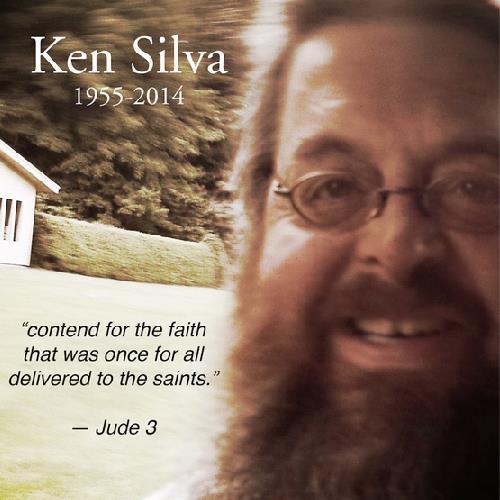
During the online memorial service (which I could accept as a memorial, but calling it a service without actual congregational participation on site is sort of a stretch for me), there were words of remembrances from various people who were very much influenced by Pastor Ken. I know these people online, and have interacted with some of them before. Yet, hearing them speak evokes mixed emotions in me.

One of the issues I am thinking of is how they use the term "ministry." Now, besides OPC scruples, at least for me the main thing is that I'm rather uncomfortable with calling what they do ministries unless it's officially linked to and endorsed by a church. Now, I'm not saying that they shouldn't do what they do. Some of them are women, like my former fellow CRN contributor Erin Benzinger. Others like my friend Mike Ratliff are laymen. The Scripture injunction for women to be silent however is within the church, and I have no problems with women speaking their mind on any issue outside the official church structures. But calling what they do ministries is something I would hesitate on. Is what they do beneficial towards the Body of Christ? Yes. Can God call them to sound the alarm in the form of discernment blogs? I do not see why not. But ministries seem to indicate to me official church authority, the delegated authority of Christ in His visible and institutional Church. Since they're not linked to any Church (besides Apprising Ministries), I would think that calling these "ministries" would not really be appropriate.

The second issue has to do with the calling of God and the temptations of such *online ministries*. As someone who was in those circles, I came to feel a certain temptation. Now, I do not know whether others involved in discernment ministries faced this, but the temptation I had felt was pride. I wanted to sound the alarm and I wanted others to come to know the truth, and I still do. But the issue here is that even our best motives are tainted with sin. Yea, I'm probably nobody in my online presence compared to Erin and Mike and many others, but even the slightest "recognition" of any kind feeds a desire to build one's name, to glorify myself as someone who knows it and can instruct others. That is why incidentally, for those who have been reading my blog for some time, they will realize my output has greatly decreased since it began. Partly this was due to busyness and study, but I needed to wrestle with my own flesh. Am I seeking to glorify God, or seeking to make a name for myself? Again, I am not saying that everyone goes online and into *online ministries* to feed their pride and reputation. I am just saying that is a temptation, and it is something I do struggle. You don't have to be a mega-church pastor to be puffed up and arrogant; you just need a few people who cling onto your very words to do so.

Now, the reason why I mentioned this is because of a remark during the online service that Pastor Ken was instrumental in helping and encouraging people to set up their own ministries. In the online discernment community, which tends towards Fundamentalism (at its best not worst), this sort of talk concerns me. Now, it might be the case that someone is indeed called to warn others in this fashion. But it is a fallacy to think that everyone who suddenly has his or her eyes opened should immediately plunge into *online ministry*. By all means, I think that those who are indeed called should do what God calls them to do, but how should we deal with the issue, especially in light of the doctrine of the Church with her offices — that does not seem to be considered, and that concerns me. God is the one who opens eyes, but the opening of eyes does not necessarily mean that God has called the person whose eyes were just opened to ministry.

So yea, I am ambivalent towards online (and by that I mean online-only) ministries. By all means, blog away, but I really think that the online discernment community needs to think more about the doctrine of the church and ministry praxis in general.

Online memorial service for Pastor Ken Silva

Pastor Chris Rosebrough has organized a sort of online memorial service for Pastor Ken Silva, who had passed on to the presence of the Lord he loves. The bulletin can be found here.

[P.S.: I am not necessarily endorsing online services, just posting this as something that has occurred.]

Thursday, October 02, 2014

When smallness is a sin

If the Gospel message is to be proclaimed to all the world, with the expectancy that many might turn to Christ, then surely it seems strange to desire for a church to remain small. Of course, Christians see the church growth movement and the megachurch model and are rightly put off by its unbiblical excess. But does that mean that being against the church growth movement and the megachurch model necessarily means a desire to be small, that smallness is a virtue? Is smallness a sign of fidelity, since many churches grow to be very big through compromising the truth?

When we look at Scripture, the main focus is that the Gospel is to be proclaimed, and the Church ought to be faithful to her Lord. The Church should desire that as many people come to know Christ as possible, and therefore it should desire growth. But if the church is faithful, sometimes that means forgoing large numbers if the way to get those numbers is to compromise the truths of Scripture. These two principles seem to be working antagonistic to each other, so how should they be resolved?

If a church desires to be faithful to her calling, then it will not compromise the Truth yet it desires as many people as possible to be saved. Since we know that Scripture does not commend the Laodicean Church but praised the small numbers of faithful believers in the church in Sardis, we can be certain that absolute numbers are not important to God. In that sense, faithfulness in smallness is commendable. Yet smallness is not commendable in Scripture because the church is to be small, but rather because the church is faithful despite her numerical inferiority. In other words, smallness is not inherently a virtue; faithfulness is.

The Scriptures therefore call us to seek as many believers as possible without sacrificing fidelity to the Truth. If fidelity means that one will stay small, then small it will be. But intentionally being against growth is unbiblical. If God grants the growth, should we not rejoice that many people have turned to Christ?

Oftentimes, the argument for smallness does not state that growth ought not to happen, but rather that when growth comes, the church ought to divide again and again. Now of course, practically, if there is a fondness for smallness, it is doubtful the members will want to grow the church which will force a split, but be that as it may be, let us just deal with the argument theoretically. The crux of this argument for smallness is that small churches are places whereby people can get to know each other easier and better. Phrased this way, the issue becomes a matter more of pragmatics, since small groups can mitigate the issue of impersonality in bigger churches. The danger as I have alluded to already is that the people in the church might prefer their comfort zone and their cliques and refuse to want the church to grow bigger, because a growth in numbers would necessitate a division which will split their fellowship. Practically also, small churches are limited as to what they can do because of their small budgets. Small churches will find it hard to support missionaries, support more than one pastor or any pastoral intern, and thus it will be hard for them to contribute to the building up of future ministers in the church. In a denominational setting, small churches are "parasitic" as it were on the bigger churches to prepare future ministers, since the small churches normally cannot afford another pastor and no interns, and thus must rely on someone else to train up their next pastor.

Smallness therefore, if achieved by discouraging church growth especially when God grants it, is sin. In fact, smallness, unless because of fidelity or environmental factors (i.e. small town), is sin. And while the argument for keeping church small through divisions not through discouraging growth fares much better, churches that have such mindsets have many practical problems and cannot function properly for the building up of the larger church.

Why I come to dislike family oriented churches

Christianity places a huge emphasis on family, and of course traditional society does that too. The family is the basic social unit of society. God works through families and that is why pedobaptism is correct (Take that, Baptists!). But increasingly, I am beginning to dislike the idea of family oriented churches, of which most non-contemporary churches are to some extent.

As per my previous post concerning structure and small groups, I have mentioned that people leak through the social circles in church. Nowhere is this more evident than in the case of older singles (i.e. not children and teenagers) in family oriented churches. Whether those singles ought to get married or not is besides the point; it is a separate question altogether. The church needs to be there for her members as they are, not as she wants them to be. And Christian singles, even if they wish to get married one day, do not want to go to church for matchmaking services! Do these families know how to interact with older singles? Or are they are a social anomaly that conservative Christians pray will cease to exist? Out of sight, out of mind! Is the impression given that they will only be treated as full members in a family-oriented church only when they get married?!

Yes, families are important. But the church does not consist only of families. How would the Apostle Paul, who was obviously not married, be treated in all these family-oriented churches? Will they try to pair him off as soon as possible?

The church is to embrace all who believe in Christ. That is another reason why I think small groups should be considered, in which all are free to join, a setting in which singles and married people can mingle. There are no second class Christians in the Kingdom of God, yet sadly that seems to be the case in many family-oriented churches.

Small groups, church programs and activities

The proliferation of programs within the church and the multiplication of roles a pastor takes up, other than preaching it seems, is a bane in the modern Evangelical church. The reaction to this trend which serves to minimize the preaching ministry of the church, is to go back to the Scriptures as to what Scripture teaches pastors are supposed to do, and then to jettison most if not all the accumulated programs and activities that are clearly not listed in Scripture. Now, this stance is something I have sympathy with. While pastors doing administrative work might be necessary in some cases, that is not what the pastor should be primarily doing. The reason for the election of the first deacons in Acts 6:1-6 was so that the Apostles did not have to serve tables, and in so doing divert their time away from what they were called to do. Ministers are to preach the Word and administer the sacraments, shepherd the flock and be in prayer. That is their calling, and not balancing the church budget and filing paperwork.

That said, I have come to realize that perhaps the jettisoning of all programs and activities might just be an over-reaction. Humans are people of habit, and not having programs and activities might result in spiritual lethargy setting in for those who are used to structure. Also, structure when implemented correctly help to correct problems which may arise within the church if the situation is left to take its natural course.

One particular activity I have in mind is the small group, or "cell group" or "home group." Now, yes, I know the history of the small groups in German Pietism with its idea of the ecclesioae in ecclesia, or "small churches within a church." John Wesley of course took his idea of the conventicles from the Moravians, a branch of German Pietism. In that kind of understanding of small groups as being ecclesiolae in ecclesia, the understanding is that the church is where one goes to hear the sermon and partake of the sacraments, while the real business of discipleship and learning the Scripture and caring for other believers is done in these "small churches." Those of us who believe that the institutional church IS the church will certainly find lots of problems with this understanding of "small groups." But we must avoid the genetic fallacy and outrightly condemn all versions of small groups just because of its checkered history.

The question here is this: What happens when there are no "small groups"? Well, what happens is that you have people coming into the church and sometimes they get overlooked. Church members stick in their cliques and if you don't really know people and are not extremely extroverted, you will sortof get left out. (And if you are an older single person in a family-oriented church, you will DEFINITELY be left out!) Since there is but the church service, the idea is that people can come together and meet each other whenever they wish. Occasionally, they just might have church events, of which all who attend are informed of said events. But, I will ask, if you are not one of those extroverts and you don't have the thick skin to crash into an event in which you don't really know people, why would you want to go to said church event? Just because the church informs anyone that they have an event does not mean that the person will feel he is invited to the event! Imparting of information is NOT invitation! He just might think it is for all the other church members who are in the "in" group(s) in church.

The problem with having zero structure is that chances are, some people are going to fall through the cracks of social interaction. Now, in the pre-modern social setting, such is irrelevant since people knew each other in a village. But we are not living in pre-modern society! Individuals in the modern world are fragmented and alienated individuals. The challenge of the church is not just to proclaim to them the Gospel, but to show them how to live as believers in community. The modern church does not have the "privilege" of having the members and visitors of the church being in the same social setting. If we are to try to build up the church as community, then how can we just "let nature takes its course" and focus merely on preaching and Bible study?

The forming of small groups therefore is a way for people to come in and get to know people. Shorn of Pietist ideas, small groups are great for people to come together for fellowship and even Bible study (which in Reformed circles could be led by ministers and elders and pastoral interns). And since they are not mandated in Scripture, they should be optional.

Now of course, some people might then claim that the solution is to have small churches so that we wouldn't have that scenario in the first place. That of course is another discussion altogether, but succinctly, my reply is NO.